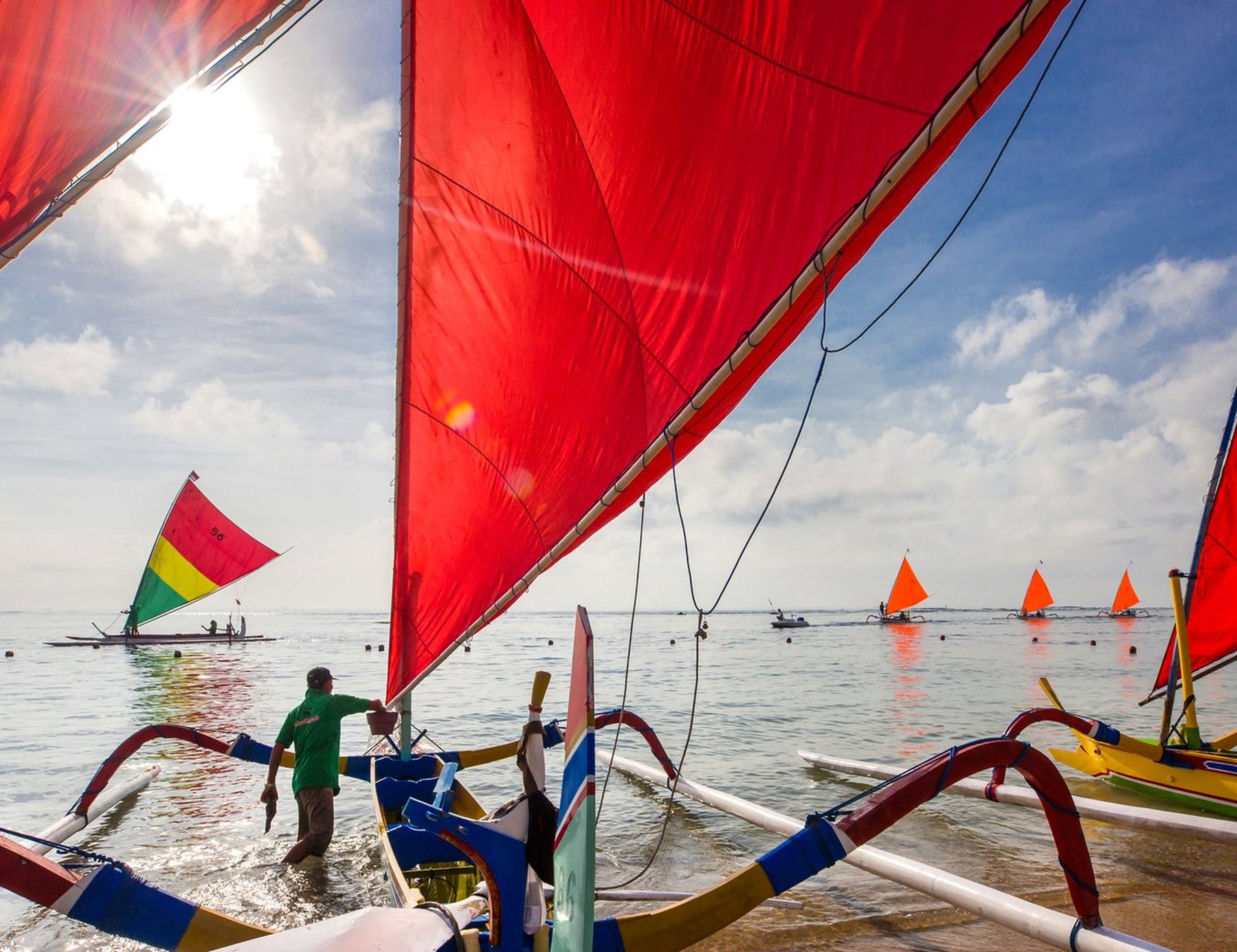

Sanur’s long, paved beach path makes a walk or bicycle ride part of an ordinary day here. Add a fish lunch at Mak Beng, time for the Blanjong inscription and an arranged dive outing, and you have a mainland stay with more than an airport connection. Its east-facing coast and lagoon set it apart from the Bukit’s cliffs; tides, boat traffic and daily conditions still matter for time in the water.
Sanur isn't Bali's primary wave hub or an on-your-doorstep reef diving base. It is a welcoming, walkable mainland choice for families, first-time visitors and travellers catching morning fast boats to Nusa Lembongan or Nusa Penida.
01
Where to stay along Sanur's long, level coast
Tandjung Sari is Sanur's heritage choice: founded in 1962, this beachfront boutique hotel helped define Bali's traditional thatch-and-stone architectural style. Its low-slung pavilions sit among mature flowering gardens, moss-covered statues and shaded courtyards right on the beach path. It commands premium rates and faces east—so plan on morning light over the water rather than sunset balconies.
Kembali Lagi Guest House is an intimate, welcoming value choice: just eight private rooms and cottages arranged around an emerald garden pool down a quiet residential lane, along with a self-contained two-bedroom family suite with a full kitchen. It sits a short seven-minute walk inland from the beach path. Segara Village Hotel caters directly to families wanting multiple swimming pools, spacious grounds, and immediate beach access; room categories and standards vary across its wings, so compare layouts carefully before choosing.
North Sanur puts you closer to the new fast-boat terminal and the long-running fish warung Mak Beng. Southern Sanur around Mertasari Beach is more peaceful and residential, bordering the wide sandflats of Baby Reef and the windy grounds used for the annual kite festival.
02
Surfing: a wet-season reef option
Unlike Bali's west coast, Sanur's reef breaks work best during the wet-season months from November to March, when westerly winds blow cleanly offshore against east-coast swells.
Sanur Reef is a hollow right-hander breaking over shallow coral—an advanced wave requiring a suitable tide and real confidence. Neighbouring Hyatt Reef, Tanjung Sari and Baby Reef offer slightly softer shoulders, though nearly all sessions involve either an outrigger boat drop-off or a long, demanding paddle across the lagoon.
Sanur Surf School advertises private and family lessons, with a July 2026 visitor report describing a lesson reached by small boat. Its own page is unclear about how prices map to 90-minute and two-hour sessions, so ask which reef or beach you'll use, how many students share an instructor and how long you'll be in the water. A separate Sanur operator moved a June 2026 lesson to Kuta when the wind turned; ask what fallback applies to your booking.

03
Diving and island boats: Sanur as your launch pad
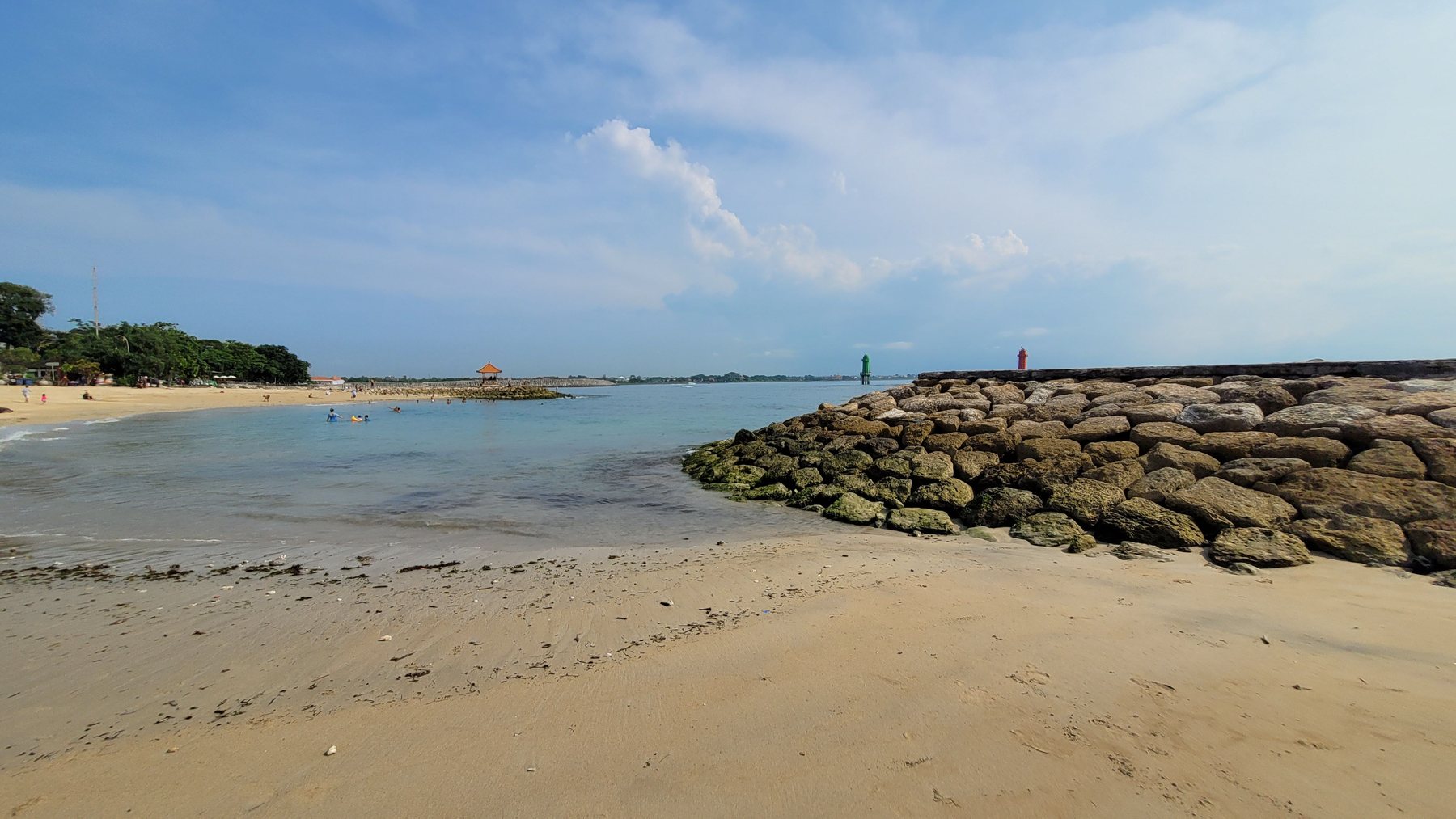
Sanur is an operational departure base rather than a shore-diving site. Operators such as Bali Aqua pick divers up directly from local hotels and run full-day excursions to Padang Bai, Nusa Penida, Tulamben and Amed. Its published day rates include hotel transfers, full scuba gear, lunch, marine park permits and taxes, and advertise no more than four divers per certified divemaster.
Trips to Padang Bai offer calmer coral garden sites around Blue Lagoon, with occasional surge at outer sites like the Jetty. Day trips to Nusa Penida target manta rays at Manta Point and drift diving along the north coast, where strong currents and chilly upwellings can occur. Always inform your dive operator of your certification level, logbook count, and date of your last dive so they match you with suitable sites.
Sanur Port also serves as Bali's main passenger terminal for fast boats to Nusa Lembongan and Nusa Penida. The modern terminal building has largely replaced the old, wet wade-out boardings, but luggage transfers, sea swell, and operator safety standards still call for common-sense attention.
04
Where to eat
Warung Mak Beng by the port entrance is widely reported to have served the same compact menu since 1941: crisp fried fish, sour fish-head soup, steamed rice and a fiery sambal. The counter moves quickly and queues form around lunch; the single set meal also means there isn't a vegetarian alternative.
Warung Little Bird on Jalan Danau Tamblingan offers a relaxed alternative with a broad menu of Indonesian staples and fruit juices. Most captured main-dish prices fall around IDR 40,000–65,000 (about US$2.25–3.70), making it the more flexible stop when not everyone wants Mak Beng's fish set.
05
Promenade mornings and Bali's earliest written history
The five-kilometre paved beachfront promenade gives Sanur its easy everyday rhythm. Rent a bicycle (about IDR 30,000–50,000 / US$1.70–2.85 per day) early in the morning when the east-facing sea catches the first soft light and temperatures are cool. During the windy months of July and August, skies above Padang Galak and Mertasari fill with giant traditional Balinese kites, including bebean (fish), janggan (dragon-bird) and pecukan (leaf) designs.
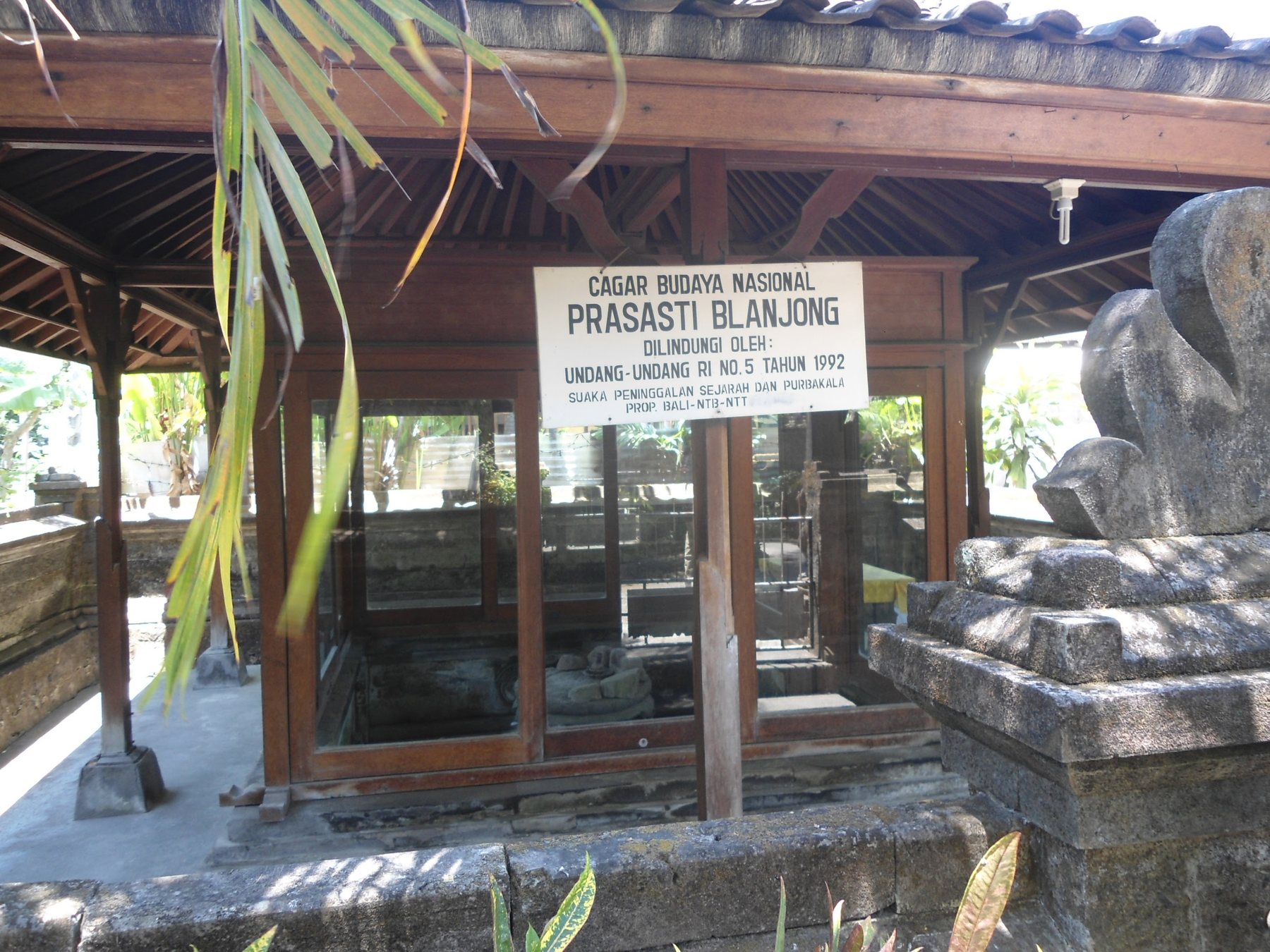
In southern Sanur, visit the Blanjong Inscription (Prasasti Blanjong), a stone pillar sheltered in a quiet temple compound. Dated to 914 CE, it carries Bali's earliest dated historical record, names King Sri Kesari Warmadewa and uses Sanskrit and Old Balinese in two scripts. Modest temple dress and a small donation are expected.
Further north along the promenade, the Le Mayeur Museum preserves the historic seaside residence of Belgian impressionist painter Adrien-Jean Le Mayeur and his wife, Balinese Legong dancer Ni Nyoman Pollok. Built in traditional Balinese style with carved teak panels and woven bamboo, it houses historical paintings and offers insight into mid-20th-century coastal life. Foreign adult entry is IDR 100,000 (about US$6); reconfirm opening hours before visiting.

06
Getting there and around
Sanur sits about fifteen kilometres from Ngurah Rai International Airport, with driving times typically ranging between 25 and 45 minutes depending on traffic. Once settled, the promenade and flat village lanes let many everyday journeys happen on foot or by bicycle. Use a metered taxi or ride-hailing app when travelling to the port with luggage.
Eligible foreign visitors pay Bali's IDR 150,000 (about US$8.50) provincial levy through Love Bali before arrival. If you are crossing to Nusa Lembongan or Penida, note that Klungkung Regency's IDR 25,000 island tourism retribution is a separate local charge paid upon arrival.
07
Costs to help you plan
| Item | Checked example |
|---|---|
| Padang Bai dive day | IDR 1,950,000 (about US$110) for two dives with Bali Aqua, including Sanur pickup, lunch, equipment, fees and tax. |
| Nusa Penida dive day | IDR 2,500,000 (about US$141) for two dives with the same inclusions. |
| Mak Beng set meal | About IDR 55,000 (about US$3.10) per person. |
| Bicycle hire | About IDR 30,000–50,000 (about US$1.70–2.85) per day. |
| Segara Village sample | US$142–302 across room categories for one room for two on 27–28 September 2026 (a historical example); taxes excluded. |
| Le Mayeur Museum | IDR 100,000 (about US$6) foreign adult. |
08
A gentle three-to-five-night stay
A three-to-five-night stay in Sanur provides an easy, restorative rhythm: cycle the beach path at dawn, schedule a full-day dive trip to Padang Bai or an island hop to Lembongan, leave a second morning for the beach, with any swim chosen around the conditions, and leave unhurried time for lunch at Mak Beng and visiting the Blanjong pillar. Sanur's enduring appeal is not packing every hour with adrenaline—it is making the transitions between flights, boats and gentle family days feel less rushed.
If you add scuba to the trip, leave the interval your dives require before flying or travelling to higher ground. Put inland outings before diving where possible, and plan the return with your dive team using DAN’s guidance.
Sources and updates
Details checked in September 2026 using Denpasar information, operator pages and attributed visitor reports. We research remotely and have not personally tested these businesses.