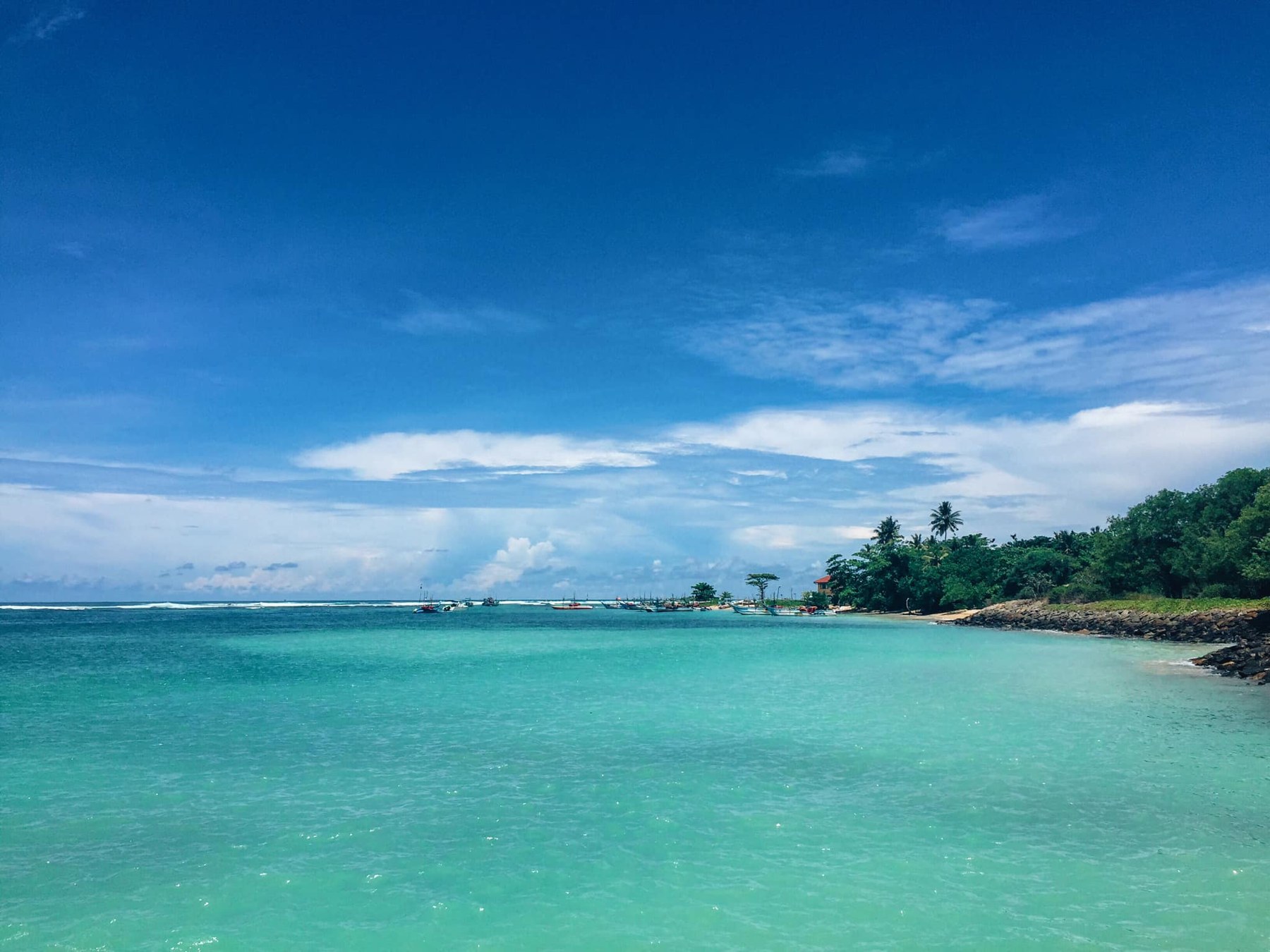

Weligama is the friendly starting point for a first surf holiday; Ahangama and the reefs around Midigama give more confident surfers room to progress. Between them are surf camps, pool stays and dinners worth leaving the board behind for. Add a separate scuba morning from Kapparathota and this coast can work well for companions with different interests.
The geography matters. Weligama, Midigama and Ahangama form a strip of coastal towns, not one village you’ll walk from end to end. Pick your room around the activity you’ll repeat most, then use road transfers for the rest. Four to six nights lets the holiday settle into a rhythm.
01
Start in the bay, progress on the reefs
Weligama’s sandy bay is the learner choice. Instruction helps you find appropriate whitewater and space among the schools, rather than treating the whole bay as equally suitable every day. Around Midigama, Lazy Right offers an intermediate step; Lazy Left is faster, and Rams asks for advanced ability. Kabalana’s Rock, near Ahangama, belongs in a confident surfer’s plan. A short drive doesn’t make these breaks interchangeable.
Kima’s Sri Lanka camp is worth considering if you want your stay to revolve around surfing and company. Its Weligama homestead has a pool, guided surf sessions and yoga, with recent guests describing an active, social atmosphere. The package advertises two guided sessions a day, session shuttles, daily breakfast and five dinners a week. Complete beginners need the separate five-day Learn to Surf option; board rental is also extra. Guiding and first lessons are different purchases.
Kima’s advertised Kuti dorm starts at about LKR 9,300 (US$28) per person per night, based on €25, with four occupants and a shared bathroom. The standard room starts at about LKR 14,100 (US$43) per person per night, based on €38, and has an en-suite bathroom. These are undated “from” prices; the final quote needs to match your dates, room and surf programme.
02
A pool stay between the bays
If a surf camp’s social timetable isn’t your preference, Twenty Two Weligambay gives you a pool and rooms or suites at Polathumodara, between Weligama and Mirissa. July and August 2026 guests describe beach holidays and meals, making it a plausible choice for a family or couple who want more hotel time.
The location is the decision: this isn’t the centre of Weligama’s learner bay. Build the road journey to your chosen lesson into the morning, and compare the dated room quote with the camp’s per-person package. They buy different kinds of holiday.
03
Give diving a morning of its own
Weligama Bay Diving Centre operates from 126 Kapparathota. Its usual fun-dive plan meets at 08:30 and returns around lunchtime, with guide, equipment and refreshments included. Groups are organised by experience, with four to six divers advertised. January 2026 guests describe completing a course over three days, while earlier divers appreciated the small groups.
The centre describes Mirissa Point at 6–12 metres, Yala Rock at 24 metres, Patch Point at 20 metres and Dispa Rock at 32 metres. The advertised boat journeys range from roughly 15 to 30 minutes, but the full morning includes preparation, diving and the return. Tell the team your certification and when you last dived so it can choose suitable sites or discuss a refresher. Depth alone doesn’t decide eligibility.
Ask for the trip total, including the exact number of dives and any hotel collection. Keep surfing and scuba on separate mornings in a short stay; that gives you more useful time with each rather than a race between appointments.
04
Curry in Ahangama, a different dinner at Citra
Coco Kitchen at 59 Matara Road is a good reason to spend an evening in Ahangama. The food centres on Sri Lankan curries and kottu; recent diners singled out Jaffna prawn curry and the open-air setting. It suits a group wanting a curry dinner after a day split between the beach and pool. The menu’s interest is the reason to go, rather than a claim that every dish is a bargain.
Citra, at Welhengoda on Matara Road, makes a different evening: white-fish golden curry, agnolotti and charcoal-cooked fish appear on its current menu. Repeat diners in early 2026 returned for the food, although some accounts found the evening expensive or hurried. Order around the meal you want, and establish the complete bill where a price is quoted in another currency.

05
A day for Galle and the fishing coast
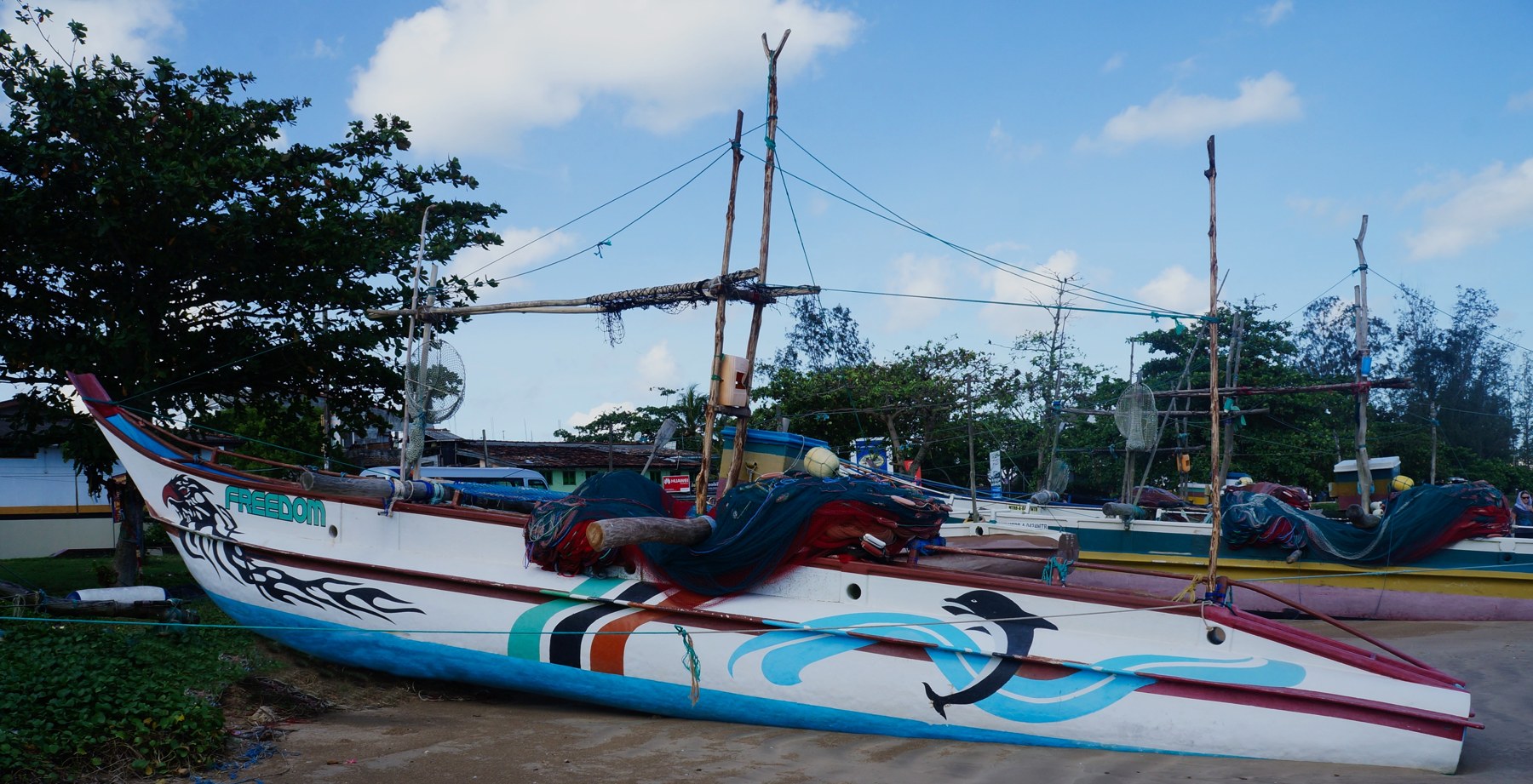
The painted outriggers on Weligama’s beach are a reminder that this is a working fishing coast as well as a place to learn surfing. You don’t need to turn every afternoon into another booked activity: leave time to watch the boats from the shore, find lunch and return to the pool.
For a more substantial outing, Galle Fort’s UNESCO history adds another layer to the coast. Its streets and buildings show European architecture meeting South Asian traditions. Give yourself time to notice the verandahs and old commercial buildings, rather than hurrying around a prescribed number of bastions. Kima estimates about an hour each way for its Galle outing; a half or full day, including a meal and the return, is a sensible allocation. Readers who want fort evenings as the centre of the holiday may prefer Unawatuna and Galle.
06
When to go and how to shape the stay
Roughly November–April is the south-coast planning window for surfing and diving. It is a seasonal pattern, not a promise of calm water at every beach. Weligama Bay Diving Centre moves its focus to the east coast in the opposite season; confirm the south-coast operation for shoulder dates.
A suggested five-night trip might use the first two mornings for instruction, give scuba a separate morning, and reserve a day for Galle or another lesson. Companions can keep the pool and an Ahangama meal while the surfers take a guided session. If you dive, leave an appropriate surface interval before the flight or hill-country travel, as explained in the country essentials.
07
Arrival and daily travel
Arrive through Bandaranaike International Airport and arrange the southbound road transfer to your actual hotel. Camps and hotels can help with the booking, but inclusions differ. Along the coast, tuk-tuks are useful for dinners and lessons away from your base; agree the fare and evening return in advance. Carrying a surfboard down the main road is a different proposition from a stroll along the sand, so let the lesson beach and your accommodation determine the transport.
Sources and updates
Researched remotely using responsible public guidance, supplier information and substantive traveller accounts. Current source checks: 17 October 2026; September research and older visitor accounts retain their original dates. No field visit, room inspection or operator safety assessment is claimed.
Rupee examples use the Central Bank of Sri Lanka’s 16 October 2026 indicative rates: US$1 = LKR 331.2860 and €1 = LKR 371.6035. Where a supplier advertises in dollars or euros, that tariff controls; conversions are approximate. Room availability for future dates was not checked. Some businesses quote individually or did not publish a usable current tariff, so no universal daily budget is offered.
Photographs identify the actual places and capture dates. Historical photographs do not establish present reef condition, swimming conditions or promised wildlife. Cropped or resized Creative Commons images retain their stated licences.