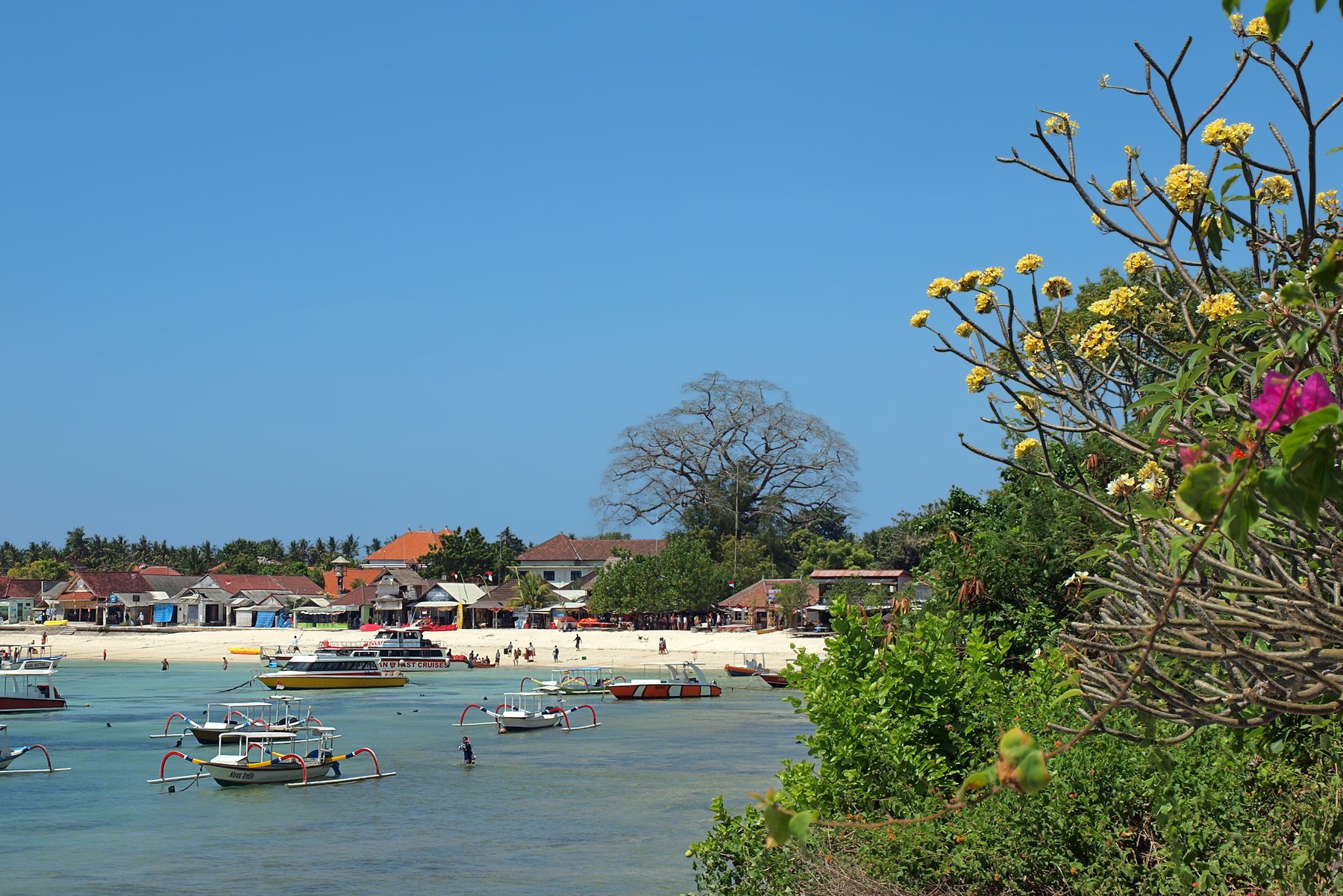

Jungutbatu brings surf boats, dive shops and beach-lane meals into one small-island stay. You can use a morning for a guided reef session or a dive trip into Penida waters, then leave another day for the mangroves and the Yellow Bridge to Ceningan. Choose your arrival port before booking a room: Jungutbatu and Mushroom Bay put you in different parts of the island.
This is the Bali base where surfing and diving fit most naturally into the same stay. Across a few days you can catch a high-tide session at Playgrounds, drift over coral gardens and, with the right trip and conditions, look for reef mantas in Penida waters. But the sea here demands genuine respect: these are open-ocean reef breaks and tidal straits known for strong currents, sudden thermoclines and heavy swells. Match each day's plans to the tide, wind and your honest experience level.
01
Where to stay across the two islands
Jungutbatu: the practical surf-and-dive hub
Jungutbatu is the island's beating heart for ocean lovers. The main offshore surf breaks sit right in front of the bay, dive operators line the beachfront lane, and family-run warungs keep dinner within an easy walk. Tigerlillys is an intimate, eight-room boutique garden stay with a pool and café set amid leafy palms. It offers a stylish, relaxed retreat, though practical quirks are worth noting: upper bungalow open-air bathrooms are reached by stairs on the ground floor, and early kitchen prep can be heard from nearby rooms.
Mushroom Bay: a sheltered beach base
Further south, Mushroom Bay offers a rounded crescent beach with soft white sand and calmer shore swimming at high tide. Hai Tide Beach Resort places traditional thatched-roof lumbung bungalows directly on the beach, praised for its beachfront pool, friendly team, and direct access to swimming and dining. Bungalow storage space is compact, so travel light.
Sandy Bay and Ceningan: rugged beauty over convenience
The western and southern shores around Sandy Bay and Dream Beach showcase dramatic limestone headlands and fiery sunsets, but require a scooter or taxi truck to reach dive shops and surf launches. Across the narrow Yellow Bridge, neighbouring Nusa Ceningan offers a slower, quieter island escape with breezy clifftop bars and direct views of the heavy left-hand reef break at Ceningan Point.
02
Surfing: tidal reef breaks and offshore boat drops
Surfing in Lembongan is defined by offshore coral reefs rather than gentle sandy beach breaks. The waves break 300 to 500 metres offshore, meaning surfers typically hire a local boat drop from the beach or undertake a long paddle across the tidal channel.
Playgrounds offers both a left and right peak. On small swells and during a rising mid-to-high tide, it can suit progressive beginners taking guided lessons as well as intermediate surfers. However, timing the tide is critical: as the tide drops, the water drains away, exposing sharp coral heads and shallow reef ledges where a fall can cause painful scrapes. Treat low tide as unsuitable.
For first-timers, Newbro Surfing advertises a beginner package for IDR 500,000 (about US$28). The roughly two-and-a-half-hour session includes island pickup, a shared return boat to the breaks, a soft-top board, reef shoes, small-group instruction and photos. The boat saves a long paddle across the channel and lets the instructor choose a break and entry point for the conditions.
Experienced surfers have heavier waves to choose from. Lacerations is a fast, hollow right-hander over shallow coral when the swell has weight. Further north, Shipwrecks delivers a powerful right-hand wall named after an old shipwreck boiler visible on the reef. On neighbouring Ceningan, Ceningan Point is a left-hand reef break shaped by southern swell and channel current; it calls for experience and local guidance. Dry-season trade winds from May to September blow offshore for Jungutbatu's breaks, but every session must be planned around the daily tide table.
03
Diving: ocean giants, drift reefs and serious currents
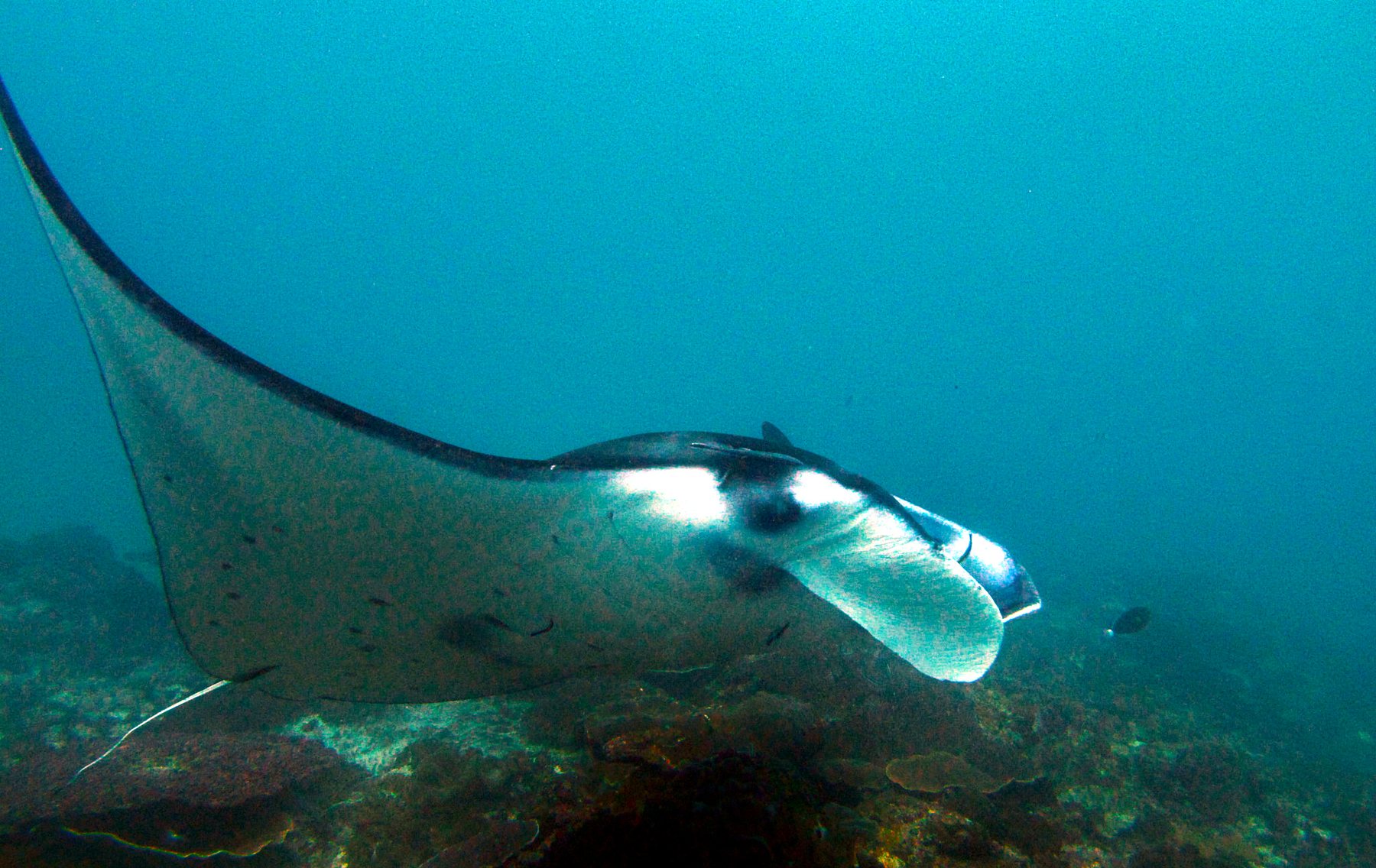
Lembongan serves as a launching pad for the Nusa Penida Marine Protected Area, where boats reach coral gardens, reef-manta habitat and seasonal ocean sunfish (mola). The tidal straits around the islands can produce strong, complex currents. Good diving here depends on matching the site to your certification, recent experience and comfort in moving water rather than chasing a particular animal.
Manta Point, on the southern coast of Nusa Penida, is known for reef mantas visiting cleaning stations. The dive is relatively shallow, typically around 8 to 15 metres, but depth does not tell the whole story: the site is exposed to Indian Ocean swell, underwater surge can be powerful and the boat journey can roll. Solid buoyancy control and comfort on a moving boat matter.
Crystal Bay is associated with mola season between July and October, but it also brings strong currents and cold thermoclines, commonly reported around 18–22°C or colder. Advanced certification or substantial recent experience is commonly recommended during this period. Let the dive team decide whether the site fits your training and the day's conditions rather than treating a wildlife sighting as the plan.
The coral slopes of Mangrove and northern Nusa Penida offer another kind of outing: drift dives over hard and soft coral, with possible turtles, reef sharks and schooling fish. Moving water still shapes these sites; let the team match the route to your training and recent experience.
Legend Diving in Jungutbatu is a highly regarded PADI 5-Star dive centre. Published fun dive packages start from IDR 945,000 (about US$53), with an IDR 150,000 (about US$8.50) boat fuel surcharge for trips to Manta Point. They operate small guide ratios (typically four divers per guide). Always tell your divemaster your exact certification, how long it has been since your last dive, and your comfort level in drift currents.

04
Where to eat after the boats return
Soka Warung on Jalan Tamarind 2 makes an easy meal after a water day: a family-run open-air restaurant serving Balinese spiced fish wrapped in banana leaf (pepes ikan), satay, vegetable gado-gado and curries at modest prices. It fills quickly in the evening, so head in early.
Sandy Bay Beach Club offers a polished sunset experience on the island's western edge. Overlooking crashing waves and rugged limestone rocks, you can sip chilled cocktails and enjoy wood-fired pizzas, fresh seafood platters, and international fare as the sun sinks into the sea. Confirm daybed minimum spends in advance if you plan to lounge through the late afternoon.
05
Mangroves, seaweed farms and the Yellow Bridge
The northern tip of Lembongan is protected by an extensive mangrove forest. Exploring these quiet waterways by traditional hand-poled wooden jukung, kayak, or stand-up paddleboard offers a serene contrast to the pounding surf. Timing matters: mangrove tours should be done around mid-to-high tide when water fills the canals. At low tide, the channels drain to thick mud. The local boat cooperative charges IDR 100,000 (about US$5.65) per person for a shared tour (two-person minimum) or IDR 200,000 to IDR 250,000 (about US$11 to US$14) for a private jukung.
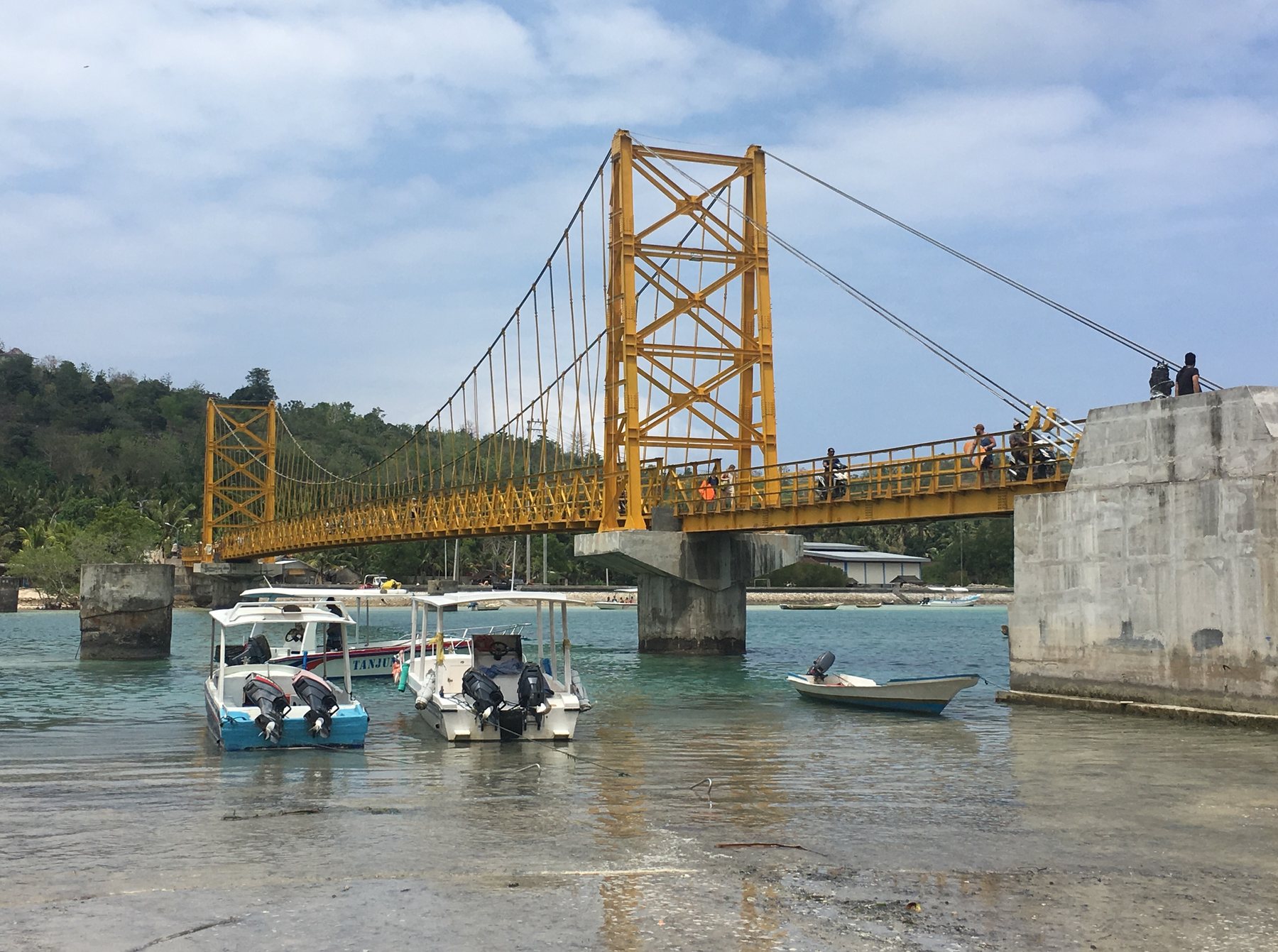
Along the channel between Lembongan and Ceningan, traditional seaweed farming continues to shape the coastal rhythm. Local families plant and harvest green and red algae in the shallow tidal beds, spreading the harvest on roadside tarpaulins to dry in the tropical sun. Spanning this scenic channel is the bright yellow suspension bridge known as the Yellow Bridge (Jembatan Kuning). Cross on foot or scooter at a gentle, considerate pace—the bridge is narrow and handles two-way pedestrian and motorbike traffic.
A vital safety note on swimming: While beaches like Dream Beach and Sandy Bay are visually breathtaking with powdery white sand and turquoise water, they are exposed to ferocious shore-dump waves and dangerous rip currents. Swimming there is frequently hazardous. Always obey warning flags, never turn your back on the ocean, and ask locally about conditions and boat movements before considering the more sheltered water at Mushroom Bay or inside Jungutbatu’s lagoon.

06
Getting there and around
Fast boats depart regularly from Sanur Harbour on mainland Bali, taking roughly 30 to 40 minutes to cross the Badung Strait. Most boats arrive at Jungutbatu or Mushroom Bay. Keep in mind that Lembongan has no permanent deep-water passenger piers: arrivals are typically 'wet landings' where you step off the boat ramp into knee-deep sea water. Wear shorts and sandals or water shoes that slip off easily, and keep electronic gear in a waterproof bag.
Upon arrival, foreign visitors must pay the official Klungkung Regency tourism retribution: IDR 25,000 (about US$1.40) for foreign adults and IDR 15,000 (about US$0.85) for children, collected at the port entry points. An additional marine conservation fee applies to diving and snorkelling activities; confirm whether your dive operator includes this in their quote.
A room near your daily meals and boat meeting point keeps short journeys on foot. For trips across the two islands, rent a scooter (wear a helmet and drive slowly over narrow, uneven roads) or hail an open-air passenger truck taxi (pick-up) through your hotel.
07
Costs to help you plan
| Item | Checked example |
|---|---|
| Beginner surf lesson | IDR 500,000 (about US$28), including local pickup, shared boat and equipment with Newbro. |
| Fun dive | From IDR 945,000 (about US$53); Manta Point boat surcharge IDR 150,000 (about US$8.50). |
| Klungkung retribution | IDR 25,000 (about US$1.40) foreign adult; IDR 15,000 (about US$0.85) child. |
| Mangrove jukung | IDR 100,000 (about US$5.65) per person shared (min 2); IDR 200,000–250,000 (about US$11–14) private. |
| Tigerlillys sample | US$66–71 for one room for two on 27–28 September 2026 (a historical example); taxes excluded. |
| Hai Tide sample | US$141–156 for one lumbung for two, same dates; taxes excluded. |
08
A four-to-six-night island rhythm
A stay of four to six nights gives Lembongan and Ceningan room to breathe. You can set aside mornings for boat dives in Penida waters, look for suitable high-tide surf windows, glide through the mangrove canals and cross the Yellow Bridge for a Ceningan sunset. The ocean sets the daily schedule here; planning around the tides and currents is what lets surfing and diving share the same small-island stay.
If you add scuba to the trip, leave the interval your dives require before flying or travelling to higher ground. Put inland outings before diving where possible, and plan the return with your dive team using DAN’s guidance.
Sources and updates
Details checked in September 2026 using Klungkung government information, conservation research, operator pages and attributed visitor reports. We have not personally tested these businesses.